
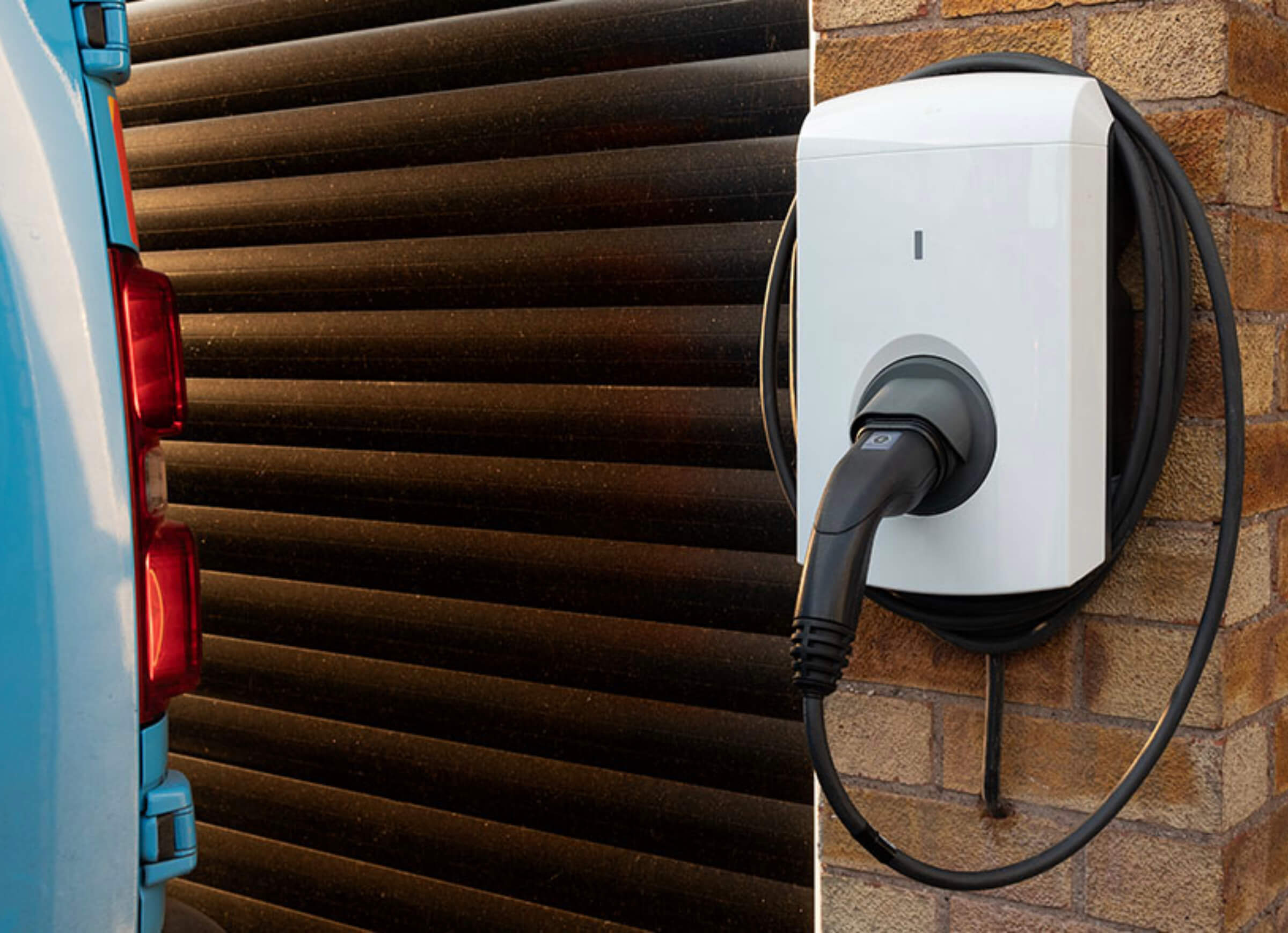
There is government money available that can help towards installing a home charging point for an electric vehicle, but the grant criteria is narrower than most people expect. It’s aimed at particular situations rather than at every driver, and the rules changed on 1 April 2026. This is a brief guide to who qualifies, how much is available, and how the process actually works.
Disclaimer: The information in this article is meant as an introductory guide. Please contact us for specific up-to-date details.
If you own a house with a driveway, there is currently no grant
This is the first thing to know, because it affects the most people. The old Electric Vehicle Homecharge Scheme, which once helped homeowners with off-street parking, closed in April 2022 and was not replaced for that group. If you own your home and can park on your own drive or in your garage, there is no grant towards a home charger at the moment. The cost of chargers has fallen since the scheme ended, but the funding is no longer there.
The grants that remain are for people in specific circumstances.
Who can get help
Renters. If you rent your home — any kind of property, including under shared ownership — you may be able to claim up to £500 towards a charger, covering 75% of the cost of buying and installing it. Your home must have its own private off-street parking, you must own or lease an eligible electric vehicle, and you will need your landlord’s permission.
Flat owner-occupiers. If you own and live in a flat with private off-street parking and an eligible vehicle, the same grant applies — up to £500, covering 75% of the cost.
Residents who can only park on the street. There is a separate grant, also up to £500, for households with no off-street parking. It comes with an important condition: the charging cable must run through a permanent channel set into the pavement — a “cross-pavement gully” — rather than trailing across the footway. Installing a gully in a public pavement needs permission from the council (the highways authority).
In every case the vehicle and the charger must both be on the government’s approved lists, and you can only claim one grant per household.
How it actually works
You do not apply for these grants yourself. An installer approved by the Office for Zero Emission Vehicles (OZEV) makes the claim on your behalf and takes the grant off your invoice, so you pay the reduced amount. A few points follow from this:
- Choose an OZEV-approved installer first; they handle the paperwork.
- The charger must not be fitted before your eligibility is confirmed. If it is, the grant can be refused.
- Since April 2026, claims need a dated quote and additional photographs of the installation.
How much, and for how long
The maximum rose from £350 to £500 per socket on 1 April 2026. The current schemes are running until 31 March 2027, which the government has described as a final year of support in this form. If your circumstances fit, there is no strong reason to wait.
On-street charging on the Island
For Island residents without a driveway, the on-street grant is worth understanding carefully. It depends on the council approving a cross-pavement gully outside your home, and at the time of writing the Isle of Wight Council does not operate a scheme for approving private gullies of this kind. The council’s stated approach has instead been to provide public charging points within roughly 200 metres of homes that have no off-street parking — it estimates that around 37% of Island homes, some 23,000 properties, fall into that category.
In practice, then, if you cannot park off-street, the realistic option today is more likely to be the public network than a grant-funded charger at your own home. Public chargers are in place across Newport, Ryde, Cowes, Ventnor, Shanklin, Sandown and Yarmouth, with more planned. This may change: the government has said it intends to make cross-pavement charging easier by removing some of the planning requirements, so it is worth checking the current position before ruling it out.
Where to check and what to do next
- For the official rules and to confirm you qualify, search “Electric Vehicle Chargepoint Grant” on gov.uk, or look on the government’s Find a Grant service for the renters and flat owners grant and the on-street parking grant.
- For impartial guidance on home charging generally, the Energy Saving Trust is a good starting point.
- For on-street and public charging on the Island, contact the Isle of Wight Council.
- Once you know which grant fits, an OZEV-approved installer will confirm eligibility and handle the claim.
If you are unsure whether any of this applies to you, we are happy to point you in the right direction.
